
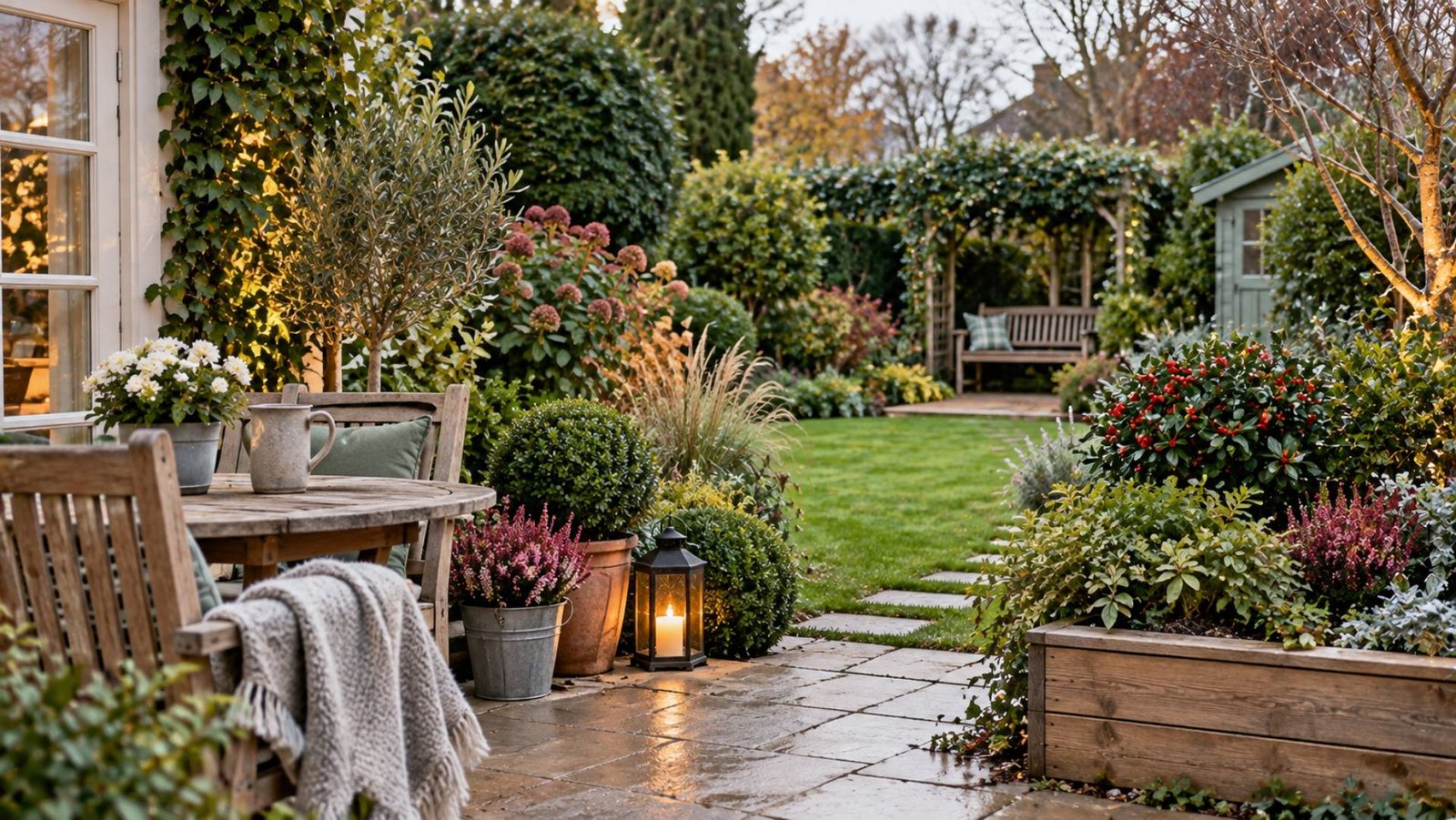
A beautiful garden should not lose its appeal when summer ends. With the right mix of evergreen plants, seasonal colour and permanent features, your outdoor space can remain attractive throughout the year.
The key is to build a strong garden structure first, then add plants that provide interest in different seasons. This approach keeps the space looking balanced without requiring constant redesign.
Build a Strong Evergreen Base
Evergreen plants provide reliable colour and structure during autumn and winter. Shrubs such as holly, skimmia, hebes, euonymus and yew can help create boundaries, privacy and attractive backgrounds for seasonal planting.
Avoid using only one type of evergreen. Mixing different heights, leaf shapes and shades creates a more natural and interesting garden.
Choose Plants for Every Season
A year-round garden needs more than summer flowers. Plan for spring bulbs, summer blooms, autumn berries and winter stems.
Some plants also provide value after flowering. Ornamental grasses, seed heads and shrubs with colourful bark can keep borders interesting during colder months.
Looking at your garden throughout the year can help you identify areas that become empty or dull.
Layer Your Planting
Planting at different heights makes a garden feel fuller and more established.
Use trees and taller shrubs at the back, medium-sized plants through the centre and ground-cover plants near the front. Layered planting also helps reduce bare soil and can limit weed growth.
Groups of plants generally look more natural than rigid rows.
Use Containers for Seasonal Colour
Containers make it easy to refresh the garden without changing permanent borders.
Spring pots can feature bulbs, while summer containers can hold colourful flowering plants. In autumn and winter, use evergreen foliage, grasses, ivy, cyclamen or hardy plants.
Large frost-resistant pots with good drainage are best for year-round use.
Add Permanent Garden Structure
Paths, patios, pergolas, raised beds and seating areas help a garden look complete even when fewer plants are flowering.
A sheltered seating area can also make the garden more usable during cooler months. Comfortable furniture, subtle lighting and protection from wind can help turn the space into an extension of the home.
Keep the Lawn Healthy
A green lawn provides a strong visual foundation.
Regular mowing, feeding and occasional aeration can help keep grass healthy. Avoid cutting it too short, particularly during dry weather.
During autumn, remove heavy layers of fallen leaves so the lawn continues receiving light and air. Avoid walking repeatedly across frozen or waterlogged grass.
Add Vertical Greenery
Walls, fences and pergolas offer valuable planting space.
Evergreen climbers such as ivy or suitable varieties of jasmine and clematis can provide year-round coverage while softening hard boundaries.
Vertical planting is especially useful in smaller gardens because it adds greenery without taking up much ground space.
Include Wildlife-Friendly Features
A healthy garden should support wildlife as well as look attractive.
Trees, hedges and shrubs can provide shelter, while berries and seed heads offer food for birds and insects. Leaving some natural areas beneath shrubs can also create useful habitats.
A shallow water source can further improve the garden for wildlife.
Use Outdoor Lighting Carefully
Soft lighting can make the garden enjoyable after sunset.
Rather than lighting the entire space, highlight a few important features such as a tree, pathway or seating area. Subtle outdoor lighting creates atmosphere while avoiding unnecessary glare.
Plan Simple Seasonal Maintenance
Regular small jobs are easier than major garden overhauls.
Spring is ideal for planting and pruning, while summer focuses on watering and mowing. Autumn is useful for planting trees, shrubs and bulbs, and winter provides time to review the overall garden structure.
Consistent maintenance helps the garden remain healthy throughout the year.
Conclusion
Creating a year-round green garden is about combining permanent structure with seasonal variety. Evergreen plants provide dependable colour, while flowers, grasses, bark, containers and garden features add interest as the seasons change.
With thoughtful planning and manageable maintenance, your garden can remain welcoming, attractive and useful throughout the entire year.