
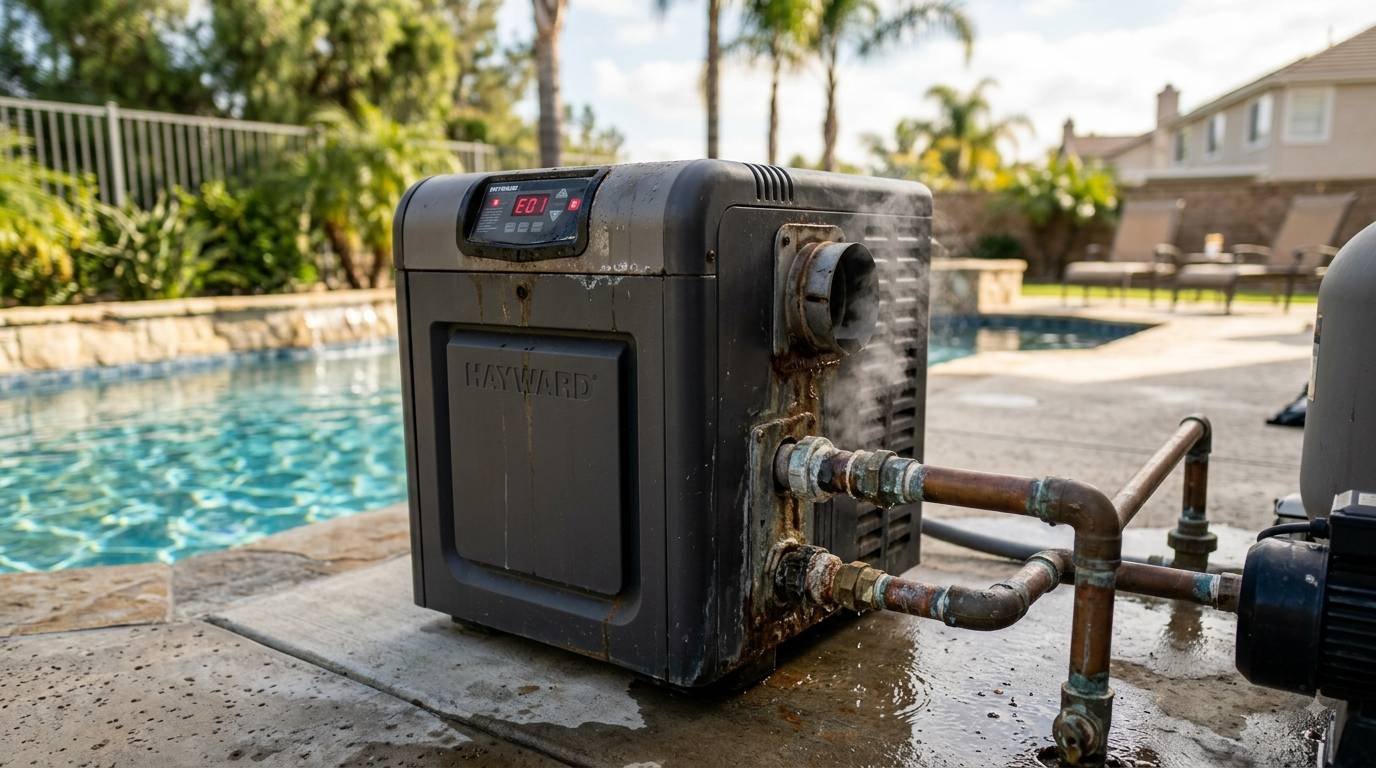
A pool heater can lose performance gradually before it stops working completely. Slow heating, unstable temperatures, strange noises, frequent cycling, corrosion, and rising operating costs may all signal trouble. Recognizing these warning signs early helps protect the equipment, prevent larger repairs, and keep the pool comfortable through cooler weather.
A dependable pool heater lets you enjoy comfortable water beyond the hottest months of the year. However, constant outdoor exposure, humidity, salt air, heavy use, and normal component wear can reduce its performance. Homeowners who depend on pool heaters for longer swim seasons should know when a minor change indicates a developing problem. Delayed repairs may increase energy use, damage important components, or cause a complete breakdown. Regular maintenance can prevent many problems, but some warning signs require professional testing. Recognizing these symptoms early helps protect your investment, maintain steady water temperatures, and keep the system operating safely and efficiently.
1. The Pool Takes Too Long to Heat
A pool heater should raise the water temperature at a reasonably consistent rate. If heating takes much longer than usual, the equipment may be losing efficiency.
The problem could involve restricted water flow, dirty components, incorrect settings, or worn internal parts. A heater that is too small for the pool may also struggle to maintain the preferred temperature.
Check the thermostat setting and confirm that water is circulating normally. If slow heating continues, schedule a professional inspection instead of forcing the system to run longer.
2. Water Temperature Keeps Changing
Unstable water temperature is another common warning sign. The water may feel warm initially and then cool unexpectedly, even though the heater is still operating. Temperature fluctuations may result from control problems, poor circulation, sensor issues, or reduced heating performance. Outdoor conditions can affect pool temperature, but repeated or severe changes should not be ignored.
Professional testing can determine whether the problem comes from the heater, its controls, or the pool’s water flow.
3. The Heater Turns On and Off Repeatedly
Frequent starting and stopping is known as short cycling. It prevents the heater from completing a normal operating cycle and may place extra stress on important components.
Possible causes include:
- Restricted water circulation
- Incorrect thermostat settings
- Dirty internal components
- Faulty sensors or controls
- Improper equipment sizing
Avoid repeatedly restarting the heater. A trained technician can test its operating cycle and identify why the system shuts down early.
4. Unusual Noises Come From the Unit
Pool heaters naturally make some sound while operating. However, banging, grinding, rattling, whistling, or popping noises may indicate a developing problem. Loose parts, restricted water flow, debris, worn components, or internal buildup can create unusual sounds. Continuing to operate the system could allow the damage to worsen.
Turn the heater off if the noise is sudden or unusually loud. Do not open the equipment or attempt internal repairs. Pool heaters contain electrical, mechanical, and heating components that require professional service.
5. Energy Costs Have Increased
A noticeable rise in operating costs may mean the heater is working harder to reach the desired water temperature. Reduced efficiency can develop because of neglected maintenance, worn parts, incorrect settings, or heat loss. When choosing pool heaters for longer swim seasons, proper sizing and professional installation are essential. A unit that does not match the pool’s size, sun exposure, use, and preferred temperature may consume more energy than necessary.
Monitor operating patterns rather than relying on a single energy bill. If the heater runs longer without improving water comfort, arrange a performance assessment.
6. Corrosion or Physical Damage Is Visible
Pool heaters are exposed to rain, humidity, pool chemicals, salt air, and changing temperatures. These conditions can contribute to corrosion and material wear. Look for rust, loose connections, damaged panels, water around the equipment, or deteriorated external parts. Visible damage may not reveal the complete condition of internal components.
Do not touch damaged wiring or attempt to seal a leak yourself. Professional inspection can determine whether the heater can be safely repaired or should be replaced.
7. The Heater Will Not Start
A pool heater that does not start may have a simple control issue or a more serious mechanical or electrical problem. Check that the thermostat is set correctly and confirm that the unit has power. If the heater still does not operate, avoid repeated reset attempts. These can place additional strain on the system without correcting the underlying cause.
Professional diagnostics can locate problems involving controls, sensors, power connections, water flow, or internal components. Timely attention may prevent a smaller fault from causing greater damage.
8. Repairs Are Becoming More Frequent
An occasional repair does not necessarily mean the heater needs replacement. However, repeated failures may indicate that the equipment is aging, inefficient, or losing reliability. Keep records of repairs, maintenance visits, energy use, and performance changes. This information helps a technician compare the cost of continued repairs with the value of replacement.
A professional can also assess whether a gas heater, electric unit, or heat pump best matches the pool’s needs and the homeowner’s efficiency goals.
How to Reduce Pool Heater Problems
Routine maintenance supports steady temperatures, lower energy use, and longer equipment life. It can also identify corrosion, reduced performance, and cycling problems before the heater fails.
Homeowners can support reliable operation by:
- Keeping the equipment area clear.
- Monitoring heating time and water temperature.
- Following recommended operating settings.
- Watching for corrosion or water leaks.
- Scheduling professional maintenance regularly.
Avoid opening the heater cabinet or attempting internal repairs. Safe testing and component service require trained professionals.
Conclusion
Pool heater problems often begin with small performance changes. Slow heating, unstable temperatures, short cycling, unusual noises, higher energy use, corrosion, and repeated repairs can all indicate that professional attention is needed. Ignoring these symptoms may increase operating costs or lead to complete system failure.
Homeowners should monitor heating times, temperature consistency, equipment condition, and monthly energy use. Routine maintenance can improve efficiency, reduce unexpected breakdowns, and extend the heater’s service life. However, internal repairs, electrical work, and system testing should always be handled by a qualified professional. If replacement becomes necessary, correct sizing should account for pool dimensions, sun exposure, usage, preferred temperature, and efficiency goals. Professionally installed and maintained pool heaters for longer swim seasons provide safer operation, dependable warmth, and better control over when the pool can be enjoyed.